Quick answer
If your site needs to become an app, with user accounts, your own data and custom logic, pick an AI app builder. Capacity, which we make, builds a working app with hosting from a description or straight from Claude or ChatGPT. Lovable and Base44 are the best-known prompt-to-app tools, Bubble handles complex logic visually, and Softr builds portals and internal tools on your data.
If you want a better website, Squarespace has design-led templates with commerce built in, Webflow gives designers control of every element with a CMS, and Framer pairs a site builder with an AI design agent.
| Tool | Best for | Paid plans from | Free plan | Watch out for |
|---|---|---|---|---|
| Capacity | a site that needs to become a real app, built from a description or from Claude or ChatGPT. | $25/month | Web app: no. Desktop: 1 project | No free plan on the web; login via Clerk, Auth0 or Supabase |
 Lovable Lovable | a web app from a chat, with the code synced to GitHub. | €25/month | Yes, 5 credits a day (up to 30 a month) | Builds web apps, not native ones |
 Base44 Base44 | non-technical builders who want an all-in-one app with the backend handled. | $16/month (yearly) | Yes, 25 message credits a month | Two kinds of credits to track |
 Bubble Bubble | apps with heavy business logic that need to scale, built visually. | $29/month (yearly) | Yes | Steeper learning curve |
 Softr Softr | client portals and internal tools on your own data, with permissions. | $19/month (yearly) | Yes, 5 AI credits a month | Mobile is an installable web app |
 Squarespace Squarespace | a polished website or small shop from design-led templates. | €12/month (yearly) | No, a 14-day trial | Store and membership fees on Basic |
 Webflow Webflow | designers who want full control of a professional site, with a CMS. | $15/month (yearly) | Yes, 2 static pages | The CMS starts on Premium |
 Framer Framer | fast, design-led sites made with an AI design agent. | €10/month (yearly) | Yes, 500 AI credits | AI credits and CMS collections by plan |
Why people look for a Wix alternative. The reasons that come back most often.
The site needs to become an app
User accounts, your own data and custom logic are where a website builder runs out. App builders build those from a description and host the result.
Branding and your domain need a Premium plan
Creating a Wix site is free, but connecting your own domain and removing Wix branding take a Premium plan, from $17 a month billed yearly.
Costs climb with the tier
Storage, eCommerce, marketing tools and collaborators grow plan by plan, from Light at $17 to Business Elite at $159 a month, billed yearly.
More design control
Designers who want to shape every element, or work with an AI design agent, look at Webflow or Framer.
How we compared them. The same questions for every tool.
- Website or app: does it need user accounts, your own data and custom logic?
- Design control: templates, a visual editor, or a description.
- Whether hosting and a custom domain are included, and from which plan.
- How you pay: yearly site plans, credits, or AI usage.
- Who it's built for: small businesses, designers, founders or business teams.
When the site needs to become an app
01 · our product
Capacity
Best for a site that needs to become a real app, built from a description or from Claude or ChatGPT.
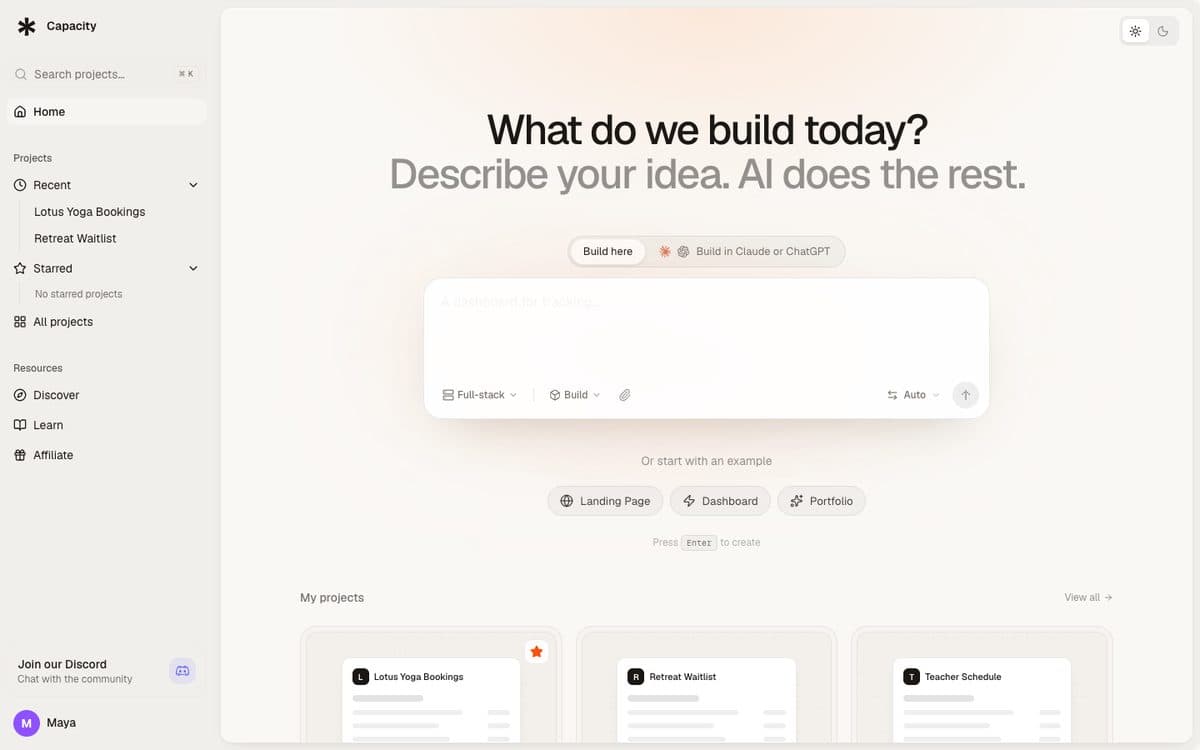
Capacity turns a plain-language description into a working website or app: a React front end, a server and its own database, published at a capacity.studio address or on your own domain. You change it by chatting and watch each change in the preview, and a website cloner can rebuild an existing page as a project you keep editing. You choose the model (Claude Opus 5.5, Claude Sonnet 5.5, Fable 5.1, Mistral Large 4 or Kimi K3) or leave it on Auto.
Why pick Capacity over Wix
- A fixed monthly price: each plan comes with a set number of credits, and building from Claude, ChatGPT or Mistral is unlimited on every paid plan, because your own subscription writes the code while Capacity hosts the app.
- Native mobile apps: Expo projects that you submit to TestFlight and Google Play from the publish dialog, with your own store accounts.
- Hosting, a database and a custom domain are part of every paid plan, with a full version history to roll back any change.
- Capacity Desktop ($249 once, macOS and Windows) runs the same builder on your computer with your Claude Code or ChatGPT plan, and pushes the code to your own GitHub.
Watch out for
- The web app has no free plan for building: paid plans start at $25 a month. Capacity Desktop has a free plan with one project.
- Login isn't built in: you add it with the Clerk or Auth0 extension, or a Supabase connection.
- In the web app, your code downloads as a zip; pushing to your own GitHub is a Desktop feature.
- There's no drag-and-drop editor: you change the site by asking.
Pricing
Starter $25/month (100 credits), Growth $69/month (250 credits), Professional $129/month (500 credits), Business $299/month (1,000 credits). Every plan includes unlimited projects, custom domains and unlimited building from Claude and ChatGPT.

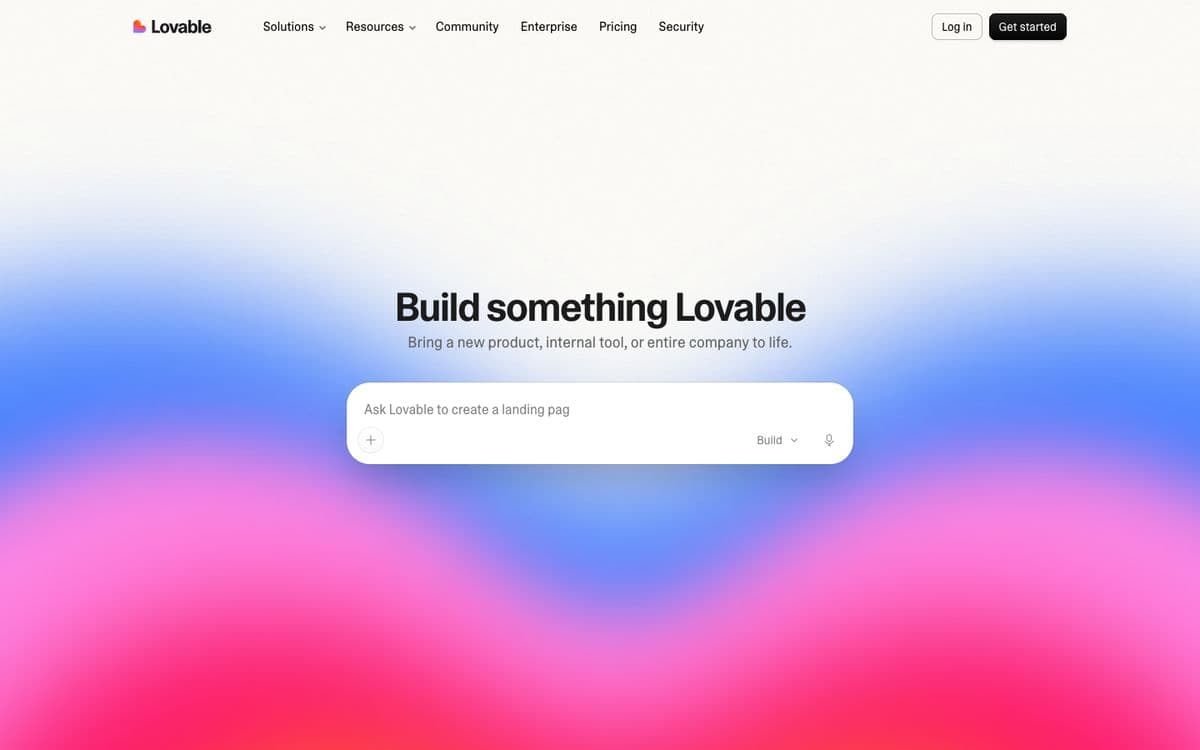
Lovable builds web apps from a chat with a live preview beside it. Lovable Cloud adds the backend, with a database, user login, file storage and server functions on a Supabase foundation, and your code syncs both ways with GitHub on every plan.
Why pick it over Wix
- The tool most 2026 guides name first for non-technical founders building a web app.
- The chat and the preview are the whole interface, and Lovable Cloud adds the database, login and storage.
- Two-way GitHub sync on every plan, including Free, so a developer can take over later.
Watch out for
- Each message uses credits, and Lovable Cloud usage is billed in credits too once its monthly grant is used.
- For the App Store or Google Play, Lovable points you to a PWA or a Capacitor wrapper you set up yourself.
Pricing
Free: 5 build credits a day, up to 30 a month. Pro: €25/month for 100 monthly credits, with rollovers, top-ups and custom domains. Business: €50/month, adding a team workspace and SSO. Prices shown in euros from France.

03
Base44
Best for non-technical builders who want an all-in-one app with the backend handled.
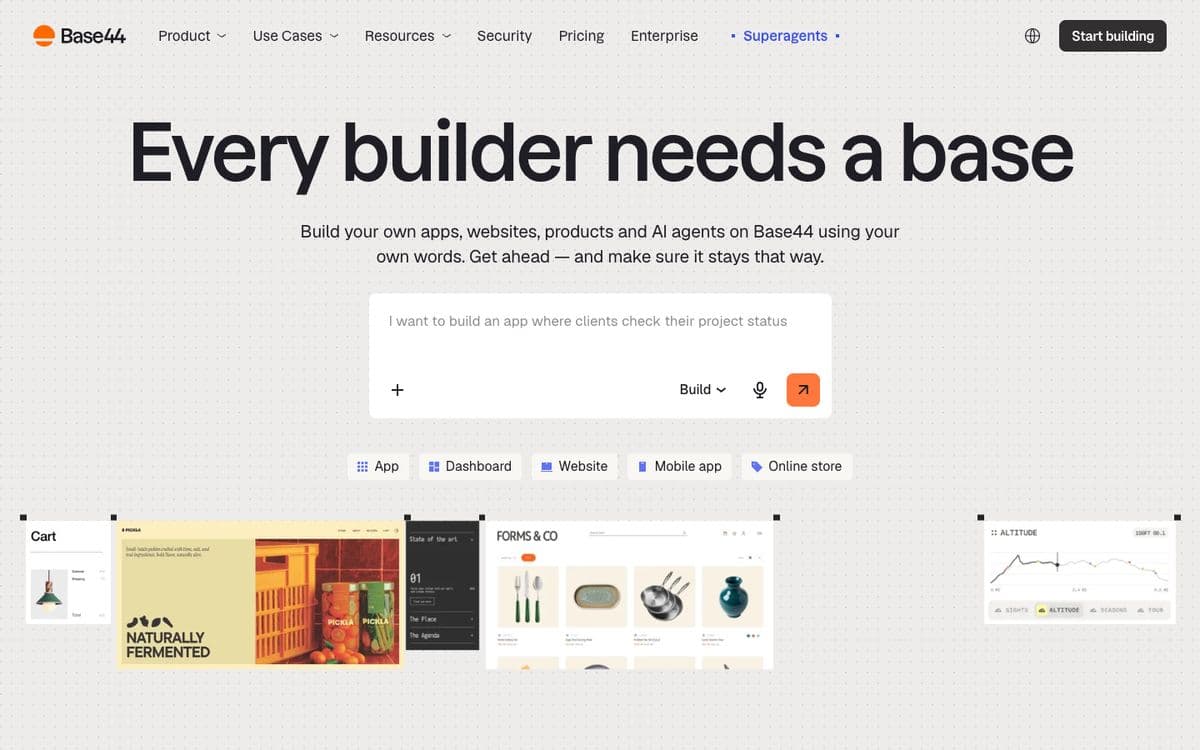
Base44, owned by Wix since 2025, builds the front end, backend, database, user login and payments from a plain-language description, runs the apps on its own infrastructure, and connects to tools like Gmail, Slack, Notion and HubSpot. It makes websites, internal tools, online stores and mobile apps.
Why pick it over Wix
- The lowest entry price for an app builder on this list: Starter is $16 a month billed yearly.
- Login and payments are part of what it builds, not an add-on.
- It wraps your app for the App Store and Google Play and helps you submit it.
Watch out for
- Plans count two kinds of credits, message credits and integration credits, so check both before a busy month.
- GitHub integration starts on the Builder plan ($40 a month billed yearly).
- Store apps are your web app in a native web view, not a native rebuild.
Pricing
Free: 25 message credits a month. Billed yearly: Starter $16/month (100 message credits), Builder $40 (250), Pro $80 (500), Elite $160 (1,200). Monthly billing costs about 20% more.

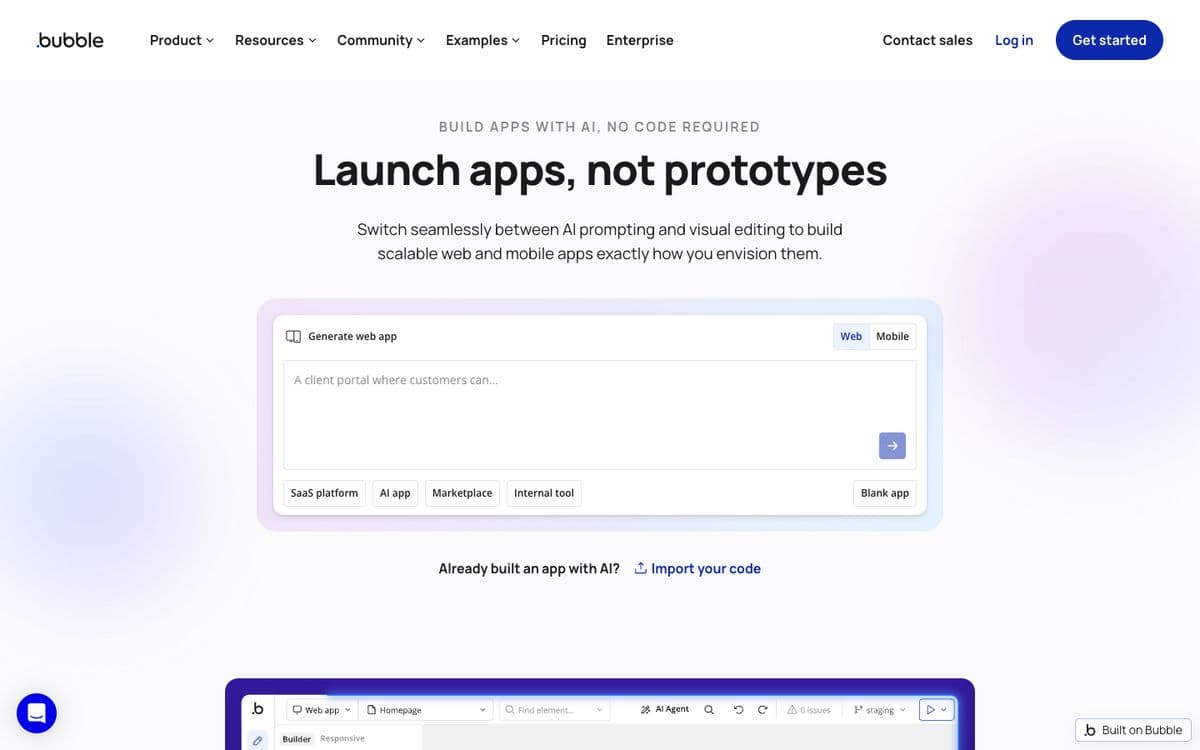
Bubble is the long-standing visual app builder. It now starts from an AI prompt and lets you switch between prompting and editing visually, for web, iOS and Android apps, with its own database and workflows.
Why pick it over Wix
- Deep control over data, workflows and permissions, which suits complex products.
- Web and native mobile apps from the same plan.
- Generating an app from a prompt doesn't use AI credits.
Watch out for
- It takes longer to learn than prompt-only builders.
- Usage is measured in workload units, which grow with your app's traffic.
Pricing
Free plan to build. Billed yearly: Starter $29/month, Growth $119/month, Team $349/month, each with more AI credits and workload units.

05
Softr
Best for client portals and internal tools on your own data, with permissions.
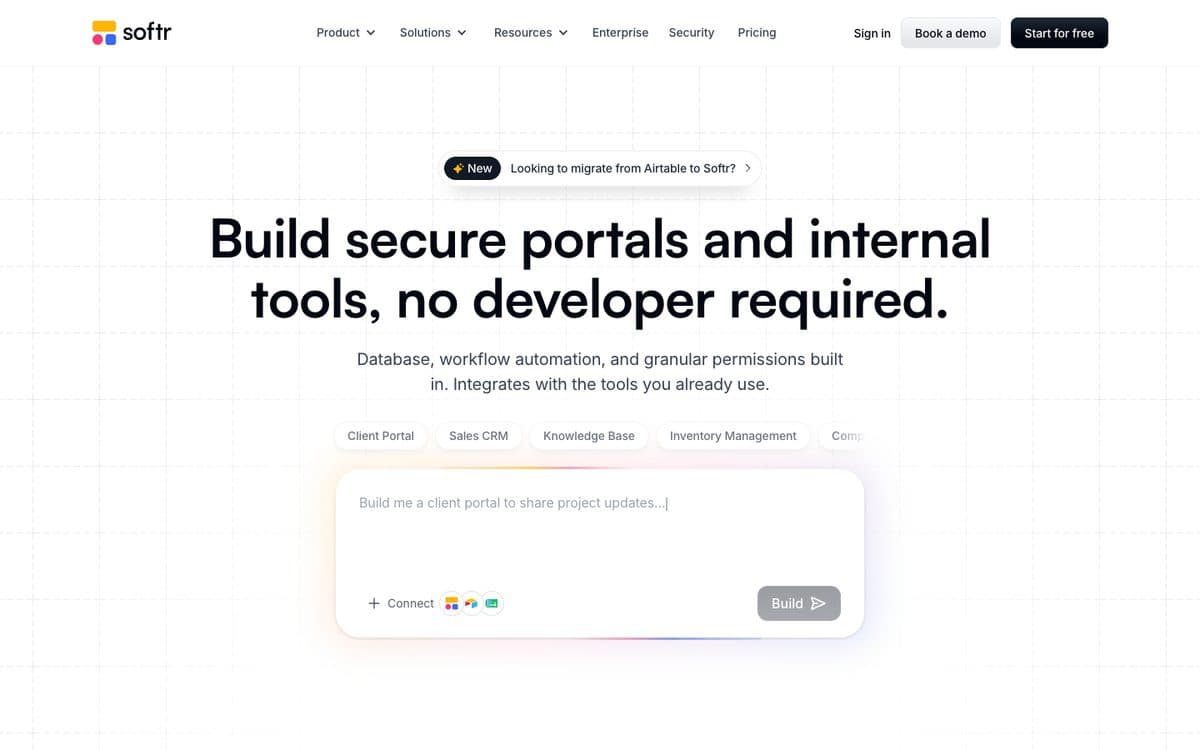
Softr is an AI app builder for business operations: secure internal tools and client portals with databases, workflow automation and integrations included. You build with AI or with no-code blocks, and connect data from its own databases or tools like Airtable and Notion.
Why pick it over Wix
- Unlimited apps, databases, workflows, agents and forms even on the free plan, with an API and an MCP server.
- Built for portals: granular permissions and visibility, Google sign-in and one-time passwords for your app's users from Pro.
- Over 59 integrations, including Airtable and Notion as data sources.
Watch out for
- AI credits are few (5 a month free, 10 on Basic, 50 on Pro), so most building is done with no-code blocks.
- Mobile means an installable web app (PWA) with push notifications, on the Business plan.
Pricing
Free: 5 AI credits a month. Billed yearly: Basic $19/month (10 AI credits, custom domain), Pro $99/month (50 AI credits, no Softr branding, permissions, custom code), Business $329/month (100 AI credits, 2FA, installable mobile app with push notifications). Yearly billing gives two months free.
Other website builders

06
Squarespace
Best for a polished website or small shop from design-led templates.
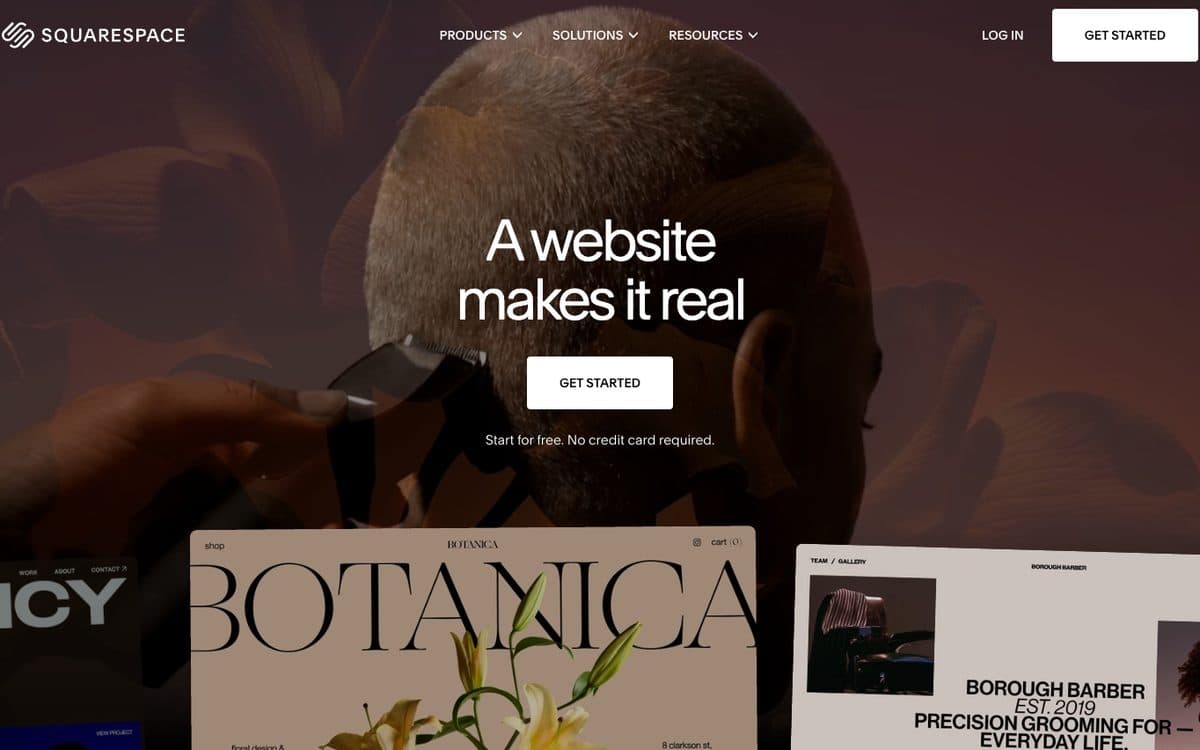
Squarespace builds websites from templates, with built-in AI tools, a custom domain free for the first year of an annual plan, and commerce on every plan: products, services, invoices, content and memberships.
Why pick it over Wix
- Templates and editing tools built for a polished result.
- Commerce on every plan: sell products and services, send invoices, sell content and memberships.
- Core adds unlimited contributors, advanced analytics and full CSS and JavaScript customisation.
Watch out for
- No free plan, only a 14-day trial.
- Basic takes a 2% online store transaction fee and 7% on digital content and memberships; Core drops the store fee to 0%.
Pricing
Billed yearly: Basic €12/month, Core €18/month, Plus €32/month, Advanced €69/month (prices shown in euros from France; paying monthly costs up to 36% more). 14-day free trial.

07
Webflow
Best for designers who want full control of a professional site, with a CMS.
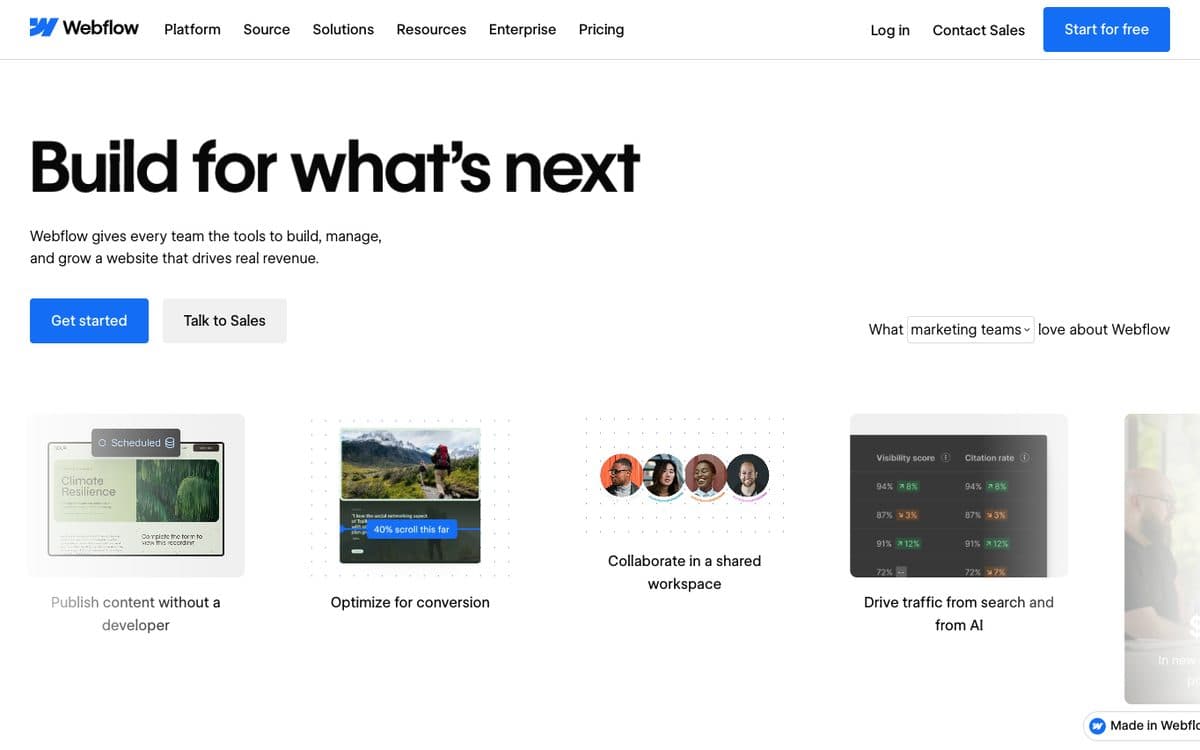
Webflow is a visual web platform for professional sites: you design every element, publish on its hosting, and manage content in its CMS. Every site plan, including the free Starter, now includes Webflow AI, an MCP server and app hosting on Webflow Cloud.
Why pick it over Wix
- Fine-grained control over design, with code components and site search on Premium.
- Webflow AI and an MCP server on every site plan.
- App hosting on Webflow Cloud, even on the free Starter plan.
Watch out for
- Basic has no CMS: content collections start on Premium, $25 a month billed yearly.
- You build visually, element by element, which takes longer to learn than a template or a prompt.
Pricing
Starter: free on a webflow.io domain, 2 static pages, 1 GB bandwidth. Billed yearly: Basic $15/month (custom domain, 300 static pages, 10 GB), Premium $25/month (Webflow CMS, from 50 GB). Team plans above.

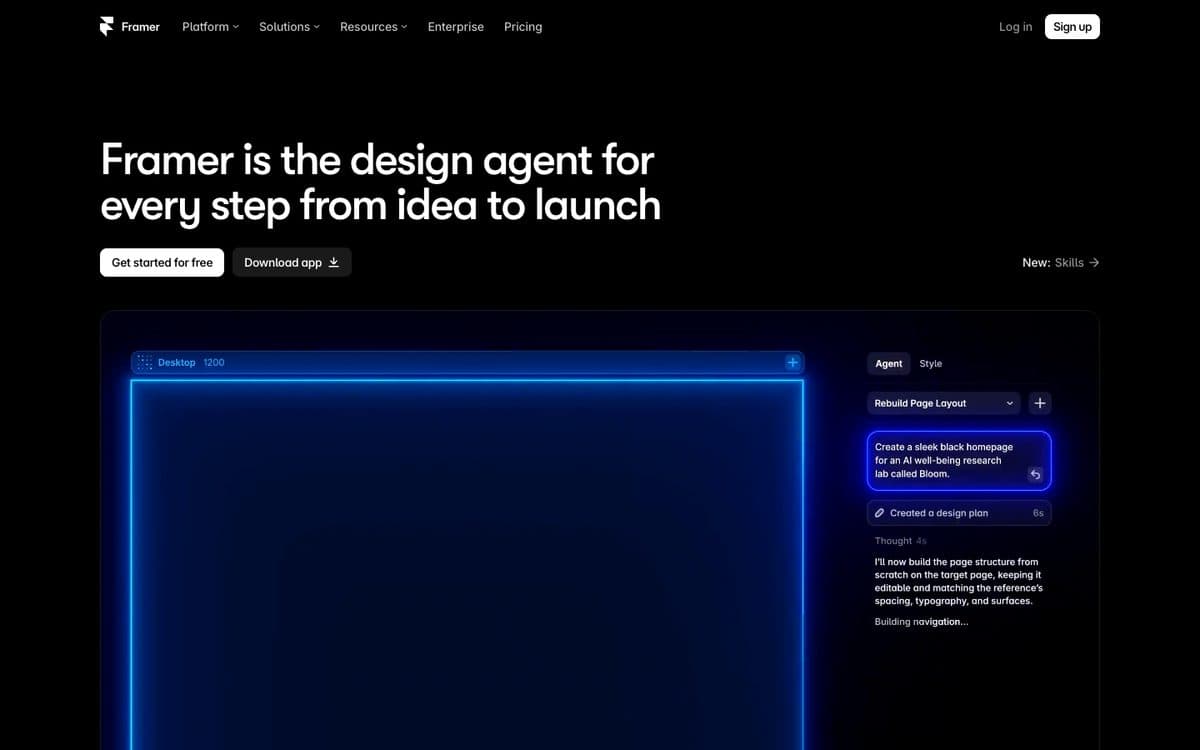
Framer is a website builder with an AI design agent: you design and publish sites on its hosting, with a CMS, a free custom domain on paid plans, and monthly AI credits to generate and edit pages.
Why pick it over Wix
- An AI design agent built into the editor.
- A free custom domain on paid plans.
- Generous bandwidth: 50 GB on Basic, 100 GB on Pro.
Watch out for
- AI credits are monthly (1,000 on Basic, 3,000 on Pro) and CMS collections are limited (2 on Basic, 10 on Pro).
- Prices are shown in euros from France and billed yearly.
Pricing
Free: 500 AI credits to try, a Framer domain, 1 GB bandwidth. Billed yearly: Basic €10/month (1,000 AI credits a month, custom domain, 2 CMS collections, 50 GB), Pro €30/month (3,000 credits, 10 CMS collections, 100 GB).
Wix and its alternatives, side by side. From each official site, October 15, 2026.
| Feature |  Wix Wix | Capacity | Lovable | Base44 | Bubble | Softr | Squarespace | Webflow | Framer |
|---|---|---|---|---|---|---|---|---|---|
| Paid plans from | $17/month (yearly) | $25/month | €25/month | $16/month (yearly) | $29/month (yearly) | $19/month (yearly) | €12/month (yearly) | $15/month (yearly) | €10/month (yearly) |
| Free plan | Yes, with Wix branding | Desktop only (1 project) | Yes | Yes | Yes | Yes | No, a 14-day trial | Yes | Yes |
| Your own domain | Premium plans | Every paid plan | Pro and above | Every paid plan, free domain for a year | – | From Basic | Free with a plan | From Basic | Free on paid plans |
| How you build | Templates and drag-and-drop, with AI creation tools | A description, or Claude and ChatGPT | A chat and a preview | A chat or a visual editor | Prompt, then visual editor | AI or no-code blocks on your data | Templates, with AI tools | Visual editor, with Webflow AI | Editor with an AI design agent |
| App features (accounts, data) | eCommerce and scheduling from Core | Server and database; login via Clerk or Supabase | Database, login and storage (Lovable Cloud) | Database, login and payments | Database and workflows | Databases, workflows and user permissions | Memberships and member content | CMS; app hosting on Webflow Cloud | CMS collections |
| Built for | Small businesses and creators | Non-technical founders, small businesses | Founders, designers, product teams | Non-technical builders | No-code builders with complex apps | Business teams: portals and internal tools | Creators and small shops | Designers and marketing teams | Designers and startups |
How to choose. Start from what you need, not from the ranking.
 A web app from a chat, code synced to GitHubLovable
 The lowest entry price for an appBase44
 Complex logic, built visuallyBubble
 A client portal on your own dataSoftr
 A polished site or small shopSquarespace
 Full design control with a CMSWebflow
 A design-led site with an AI agentFramer
When to stay on Wix
If you're building a brochure site, a small store or a booking page and want templates, hosting, marketing tools and 24/7 support in one place, Wix covers it from $17 a month billed yearly, with AI creation tools in every plan.
Questions people ask. Short answers, with the details above.
What is the best alternative to Wix?
For a better website, Squarespace for design-led templates and commerce, Webflow for full design control with a CMS, or Framer for an AI design agent. If your site needs to become an app with accounts and data, an AI app builder: Capacity (which we make), Lovable, Base44, Bubble or Softr.
Wix is too limited for my app idea. What should I use?
An app builder: Capacity, Lovable and Base44 build a full app with its data from a description and host it, Bubble handles complex logic visually, and Softr builds portals and internal tools on your data. Capacity also builds from inside Claude or ChatGPT and ships native mobile apps.
Is there a free Wix alternative?
Webflow and Framer have free plans on their own domains, and Lovable, Base44, Bubble and Softr have free plans for apps. Squarespace has a 14-day trial instead. The Capacity web app has no free plan; Capacity Desktop has one with a single project.
Wix vs Squarespace: which is better?
Both build sites from templates with hosting and commerce. Squarespace starts at €12 a month billed yearly (shown from France) with a free custom domain and no free plan; Wix starts free, and its Premium plans, from $17 a month billed yearly, add your domain and remove Wix branding.
Wix vs Webflow: which should I use?
Wix is quicker for a small business site from a template. Webflow gives designers control of every element and a CMS (from its Premium plan), at $15 a month billed yearly for Basic.
Can I move my Wix site to another builder?
Website builders rebuild the site in their own editor. With Capacity, you can describe the site or use its website cloner to rebuild an existing page as a project you keep editing.
Related comparisons
Try the alternative we build.
Describe your app in a sentence and Capacity builds it, or connect it to Claude or ChatGPT and build from the chat. Plans from $25 a month.