

Capacity vs Meku.dev
Looking for a Meku.dev alternative?
Discover why developers choose Capacity.
Both platforms promise AI-powered app development, but they take fundamentally different approaches. This comprehensive comparison will help you choose the right tool for your projects in 2026.
Both offer free tiers
Start building today
More specification options
Brief, UX, Design, Stories
Code ownership
Export to GitHub anytime
What is Meku.dev?
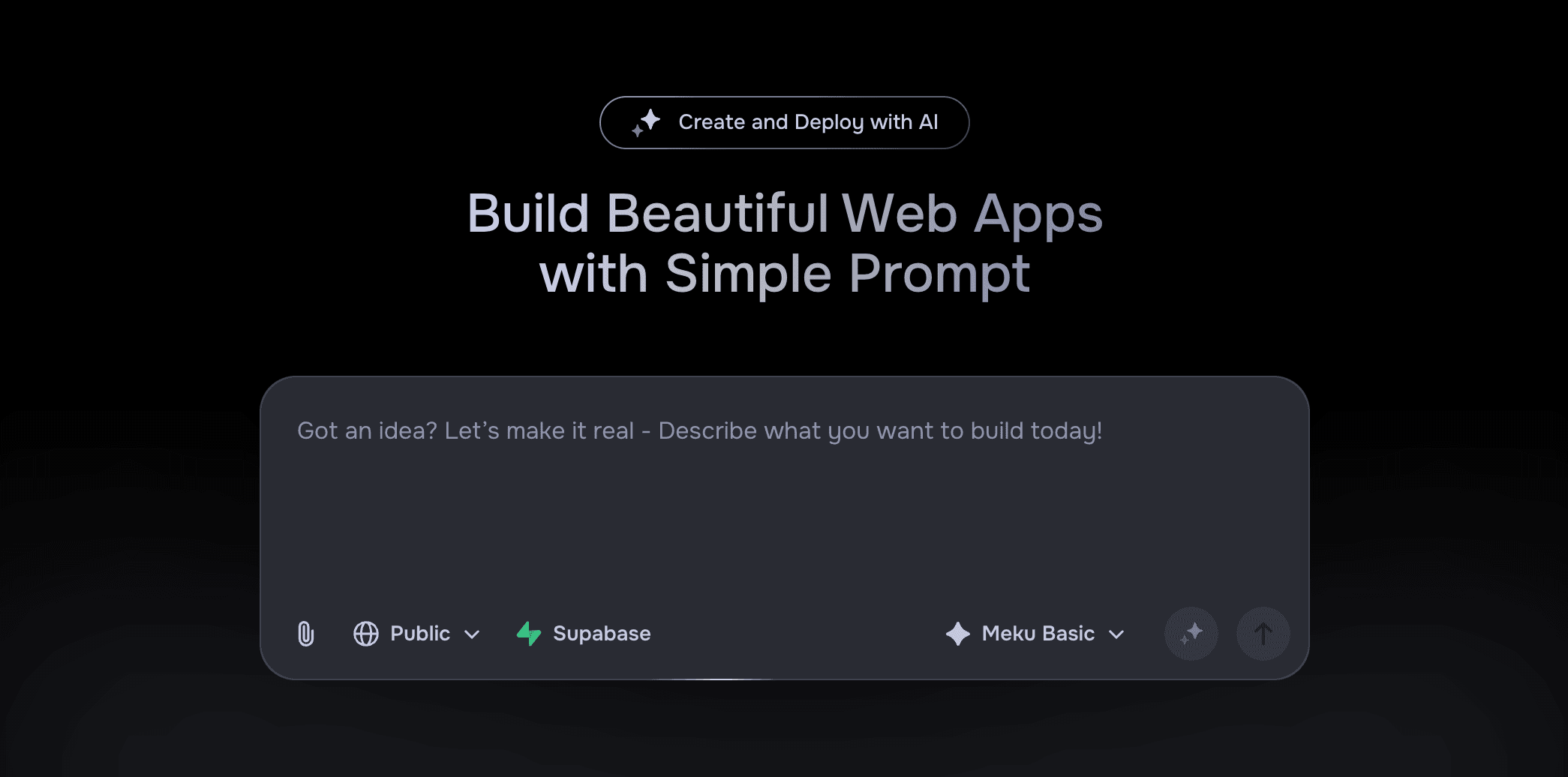
Meku.dev Meku.dev is an AI-powered web app builder that lets you create full-stack applications through natural language prompts. It features live deployment, GitHub integration, and Supabase support for database functionality.
Meku.dev Key Features
- AI generates apps from natural language prompts
- Full-stack support with Supabase integration
- Live deployment and hosting included
- GitHub integration and code export
- Free tier with 150 monthly credits
Meku.dev Limitations
- No specification-first methodology
- Relies on prompt-based generation (vibe coding)
- Limited control over architecture decisions
- No integrated user story management
- No AI co-founder for strategic guidance
Meku.dev Review: A Detailed Look
Meku.dev positions itself as a fast way to build web apps using AI. The platform emphasizes speed, claiming to deliver in minutes what traditionally took days or weeks. Users describe their app idea in plain language, and the AI generates a working prototype that can be customized through chat-based commands.
The platform includes useful features like Supabase integration for databases, GitHub connectivity for version control, and the ability to export your code. It's a solid option for quick prototypes and simple applications.
However, like other prompt-based tools, Meku.dev relies on what we call "vibe coding" - you describe what you want in natural language, and the AI interprets your intent. This works for simple projects but often leads to frustration for complex applications where precise requirements matter.
Why Choose Capacity Over Meku.dev
Capacity takes a fundamentally different approach to AI development that produces better, more maintainable results.
Spec-First Development
Unlike Meku.dev's prompt-based approach, Capacity uses spec coding - a methodology where you define comprehensive specifications before any code is generated.
- Project brief documentation
- User experience specifications
- Design system definitions
- User story management
AI Co-founder
While Meku.dev offers chat-based refinement, Capacity provides a true AI co-founder experience that helps you think through your product holistically.
- Strategic product guidance
- Helps refine specifications
- Understands full project context
- Persistent knowledge across sessions
Instant Live Preview
See your application come to life as you build. Capacity provides real-time preview with hot reloading, so you never lose context.
- Hot reload as you code
- Mobile-responsive testing
- Instant feedback loop
- Debug in real-time
True Full-Stack Apps
Build complete applications with frontend, backend, and database - all integrated seamlessly with Supabase for production-ready infrastructure.
- React + Next.js frontend
- Supabase database integration
- Authentication built-in
- API routes ready to use
How Capacity Works
A step-by-step look at the spec-first development process
Write Your Project Brief
Start by describing your project at a high level. What problem does it solve? Who is it for? What are the core features? Your AI co-founder helps you refine and structure your ideas into a clear, actionable brief.
Define User Experience
Map out user flows, interactions, and the overall experience you want to create. Define how users will navigate your app, what actions they'll take, and what outcomes they'll achieve.
Specify Design Requirements
Document your visual preferences, brand guidelines, and design system. Include color palettes, typography, component styles, and layout preferences.
Create User Stories
Break down your features into user stories - specific, implementable tasks. Each story becomes a clear instruction for the AI, ensuring nothing gets lost in translation.
Generate, Deploy, Iterate
With your specifications complete, AI generates production-ready code. Deploy instantly to your custom domain, connect to GitHub for version control, and iterate by updating your specs.
Feature-by-Feature Comparison
See how Capacity stacks up against Meku.dev across key features
| Feature | Capacity | Meku.dev |
|---|---|---|
| Spec-First Development | ||
| AI Code Generation | ||
| Project Brief Management | ||
| User Story Tracking | ||
| UX Specifications | ||
| Design System Specs | ||
| Real-time Live Preview | ||
| Supabase database integration | ||
| GitHub Integration | ||
| Code Export | ||
| Custom Domains | ||
| Built-in Hosting | ||
| AI Advisor/Co-founder | ||
| Self-Fixing Code | ||
| Iterative Spec Updates | ||
| Living Documentation | ||
| Free Tier |
What Can You Build with Capacity?
Real-world applications that benefit from spec-first development
SaaS Dashboard
Build a complete SaaS application with user authentication, subscription management, admin dashboard, and analytics. Capacity's spec-first approach ensures all user roles, permissions, and data flows are clearly defined before development.
E-commerce Platform
Create a full-featured online store with product catalog, shopping cart, checkout flow, and order management. Specify your exact product structure, payment flows, and inventory logic upfront.
Internal Tools
Build custom internal tools for your team - CRMs, inventory systems, project trackers, or data dashboards. Define your workflows and data models in specifications for precise implementation.
Client Portals
Create branded client portals with secure login, document sharing, project tracking, and communication features. Spec coding ensures every user interaction is thoughtfully designed.
Pricing Comparison
Transparent pricing that scales with your needs
Capacity- Free tier available
- Credit-based flexible pricing
- Pay only for what you use
- No forced monthly commitment
- Hosting included
Meku.dev- 150 monthly credits (50 daily limit)
- Up to 3 projects on free tier
- Premium plans for more credits
- Additional credits purchasable
- Built-in hosting included
The Spec Coding Advantage
Why Capacity's specification-first approach beats Meku.dev's prompt-based generation
Meku.dev's ApproachPrompt-Based Generation
"Build me a task management app"
AI interprets and guesses requirements
Generic output that may not match your vision
- Requires multiple iterations to get it right
- AI fills in gaps with assumptions
- No structured documentation
Capacity's ApproachSpec-First Development
Detailed specs: Brief + UX + Design + User Stories
AI knows exactly what to build
Production-ready code matching your vision
- First output matches requirements
- No guessing - specs are explicit
- Living documentation stays in sync
How to Switch from Meku.dev to Capacity
A step-by-step migration guide for Meku.dev users
Export Your Meku.dev Project
If you have existing code in Meku.dev, export it as a ZIP or connect to GitHub. Make note of what's working and what needs improvement.
Create Your Project Brief in Capacity
Start fresh with Capacity by creating a comprehensive project brief. Describe your product vision, target users, core features, and business goals. The AI co-founder will help you refine this.
Define User Experience Specifications
Map out your user flows, page structure, and interactions. This is where Capacity shines - you're explicitly defining how users will navigate and use your application.
Set Up Design Specifications
Configure your design system including colors, typography, spacing, and component styles. This ensures your new build maintains brand consistency.
Create User Stories
Break down your features into user stories. Each story becomes a clear, implementable task that the AI can execute precisely based on your specifications.
Generate and Deploy
With your specifications complete, let Capacity's AI generate production-ready code. Connect to GitHub, deploy to your custom domain, and you're live.
Who Should Choose Capacity?
Capacity is the better choice if you're building something that matters
Serious Founders
Building an MVP that needs to be production-ready, not just a prototype.
Technical Teams
Developers who want AI assistance without sacrificing code quality or architecture.
Complex Projects
Applications requiring careful planning, multiple features, and long-term maintainability.
Enterprise Builders
Teams that need structured documentation and clear specifications for compliance.
Budget-Conscious
Those who want a free tier to start and flexible pay-as-you-go pricing.
Fast Iterators
Builders who want to quickly update specs and regenerate code without starting over.
Technical Comparison
A deeper look at the technical differences between platforms
Tech Stack
Capacity
- React 18 + Next.js 14
- TypeScript for type safety
- Tailwind CSS for styling
- Supabase (PostgreSQL, Auth, Realtime)
Meku.dev
- React + Next.js
- Supabase integration
- Custom hosting infrastructure
Deployment Options
Capacity
- One-click deploy to Capacity hosting
- GitHub integration for CI/CD
- Export and self-host anywhere
- Custom domains with auto SSL
Meku.dev
- Built-in hosting
- Code export as ZIP or GitHub
- Custom domains supported
Database & Backend
Capacity
- Supabase PostgreSQL
- Row-level security
- Real-time subscriptions
- Edge functions
- Built-in authentication
Meku.dev
- Supabase integration available
- Full-stack support
- Authentication support
Security & Compliance
Capacity
- Supabase SOC2 compliance
- Row-level security policies
- OAuth & social login
- Full code ownership
Meku.dev
- Code export for ownership
- Supabase security features
- GitHub integration
Frequently Asked Questions
Common questions about Capacity vs Meku.dev
What makes Capacity different from Meku.dev?
The fundamental difference is methodology. Meku.dev uses prompt-based generation where you describe what you want and AI interprets it. Capacity uses spec-first development where you define detailed specifications (project brief, UX, design, user stories) before code generation. This results in more accurate, maintainable code that matches your exact requirements.
Is Capacity free to try?
Yes! Capacity offers a free tier so you can experience spec-first development before committing. Meku.dev also offers a free tier with 150 monthly credits. Both platforms let you start without a credit card, but Capacity's spec-first approach helps you build better apps from the start.
Can I migrate from Meku.dev to Capacity?
Absolutely. Since Capacity generates standard React/Next.js code and integrates with GitHub, you can start fresh with Capacity's spec-first approach or bring existing concepts to be properly specified. The time investment in specifications pays off with cleaner, more maintainable code.
Which platform is better for complex applications?
Capacity is specifically designed for complex applications. The spec-first methodology ensures that all requirements, user flows, and design decisions are documented before development begins. This prevents the common issue of prompt-based tools where complexity leads to misinterpretation and constant corrections.
Does Capacity support databases?
Yes! Both Capacity and Meku.dev have Supabase integration. However, Capacity's spec-first approach means your database schema, relationships, and security rules are thoughtfully planned as part of your specifications, not just generated on-the-fly from a prompt.
Can I export my code from Capacity?
Yes, you own your code completely. Capacity integrates with GitHub and generates standard React/Next.js code that you can deploy anywhere. There's no vendor lock-in - your specifications and code are yours to keep.
Is Meku.dev good for beginners?
Meku.dev can work for beginners who want quick results, but the prompt-based approach often leads to frustration when the AI doesn't understand exactly what you want. Capacity's spec-first approach actually helps beginners think through their product more clearly, resulting in better outcomes even if the initial learning curve is slightly higher.
How does Capacity handle design and styling?
Capacity includes design specifications as part of the spec-first methodology. You define your color palette, typography, component styles, and design system preferences before code generation. This ensures consistent, beautiful interfaces that match your brand, rather than generic AI-generated designs.
What tech stack does Capacity use?
Capacity generates modern, production-ready code using React, Next.js, TypeScript, and Tailwind CSS for the frontend. For backend and database, it integrates with Supabase, giving you PostgreSQL, authentication, real-time subscriptions, and edge functions out of the box.
Can I use my own domain with Capacity?
Yes, both Capacity and Meku.dev support custom domains for all deployed applications. You can connect your own domain and have your app running on your brand's URL. SSL certificates are automatically provisioned and managed.
How does Capacity compare to other AI app builders like Bolt, Lovable, or v0?
While tools like Bolt, Lovable, v0, and Meku.dev use prompt-based generation, Capacity stands apart with its spec-first methodology. Instead of hoping the AI understands your vague description, you define comprehensive specifications that guide precise code generation. This results in fewer iterations, better architecture, and more maintainable code.
Does Capacity work for mobile apps?
Capacity currently focuses on web applications built with React and Next.js. All generated apps are fully responsive and work great on mobile browsers. Native mobile app development (iOS/Android) is on the roadmap for future releases.
The Bottom Line: Capacity vs Meku.dev
Both Capacity and Meku.dev are AI-powered app builders with similar technical foundations - both support Supabase, GitHub, and code export. The key difference is in methodology. Meku.dev is a solid choice for quick prototypes and simple applications where you want to describe your idea and get started fast.
Capacity is the better choice for serious builders who want production-ready applications. The spec-first methodology means you spend time upfront defining exactly what you want, resulting in code that matches your vision the first time. No more endless prompt iterations or AI guesswork.
If you're building something that matters - an MVP for investors, a SaaS product, or internal tools for your team - Capacity's structured approach will save you time and produce better results.